
JingZhi Camera JingZhi Camera

2026 Best Hidden Wall Camera for Home Security

Time:2026-10-02 Author:Oliver
0%

Choosing the 2026 Best Hidden Wall Camera requires more than comparing resolution and price. A dependable model should protect your home without undermining personal privacy. It should blend naturally with a hallway wall, deliver clear footage in low light, and send stable alerts when movement matters. Small details count. A loose power cable, delayed notification, or weak Wi-Fi signal can make an impressive camera disappointing.

This guide evaluates each Hidden Wall Camera through practical security standards. We consider image clarity, night performance, motion accuracy, storage protection, installation quality, and mobile controls. We also examine privacy safeguards, including visible disclosure, consent, local recording rules, and secure account settings. Hidden devices must never be used in bedrooms, bathrooms, rental properties, or private spaces without clear authorization. Laws vary by location. Check local requirements before recording anyone.

Privacy expert Ann Cavoukian has said, “Privacy is not about secrecy; it’s about control.” That principle belongs at the center of every buying decision. The best camera is not always the smallest one. Sometimes, a clearly disclosed device offers stronger trust and fewer legal concerns. Our assessment is useful, but not perfect. Signal strength changes between homes. Software updates can alter performance. Even excellent detection may miss a person behind furniture or mistake a passing shadow for movement. Use this guide as a careful starting point, then test the camera in your own hallway, near the front door, and beside the router. Security should feel reassuring, not intrusive.
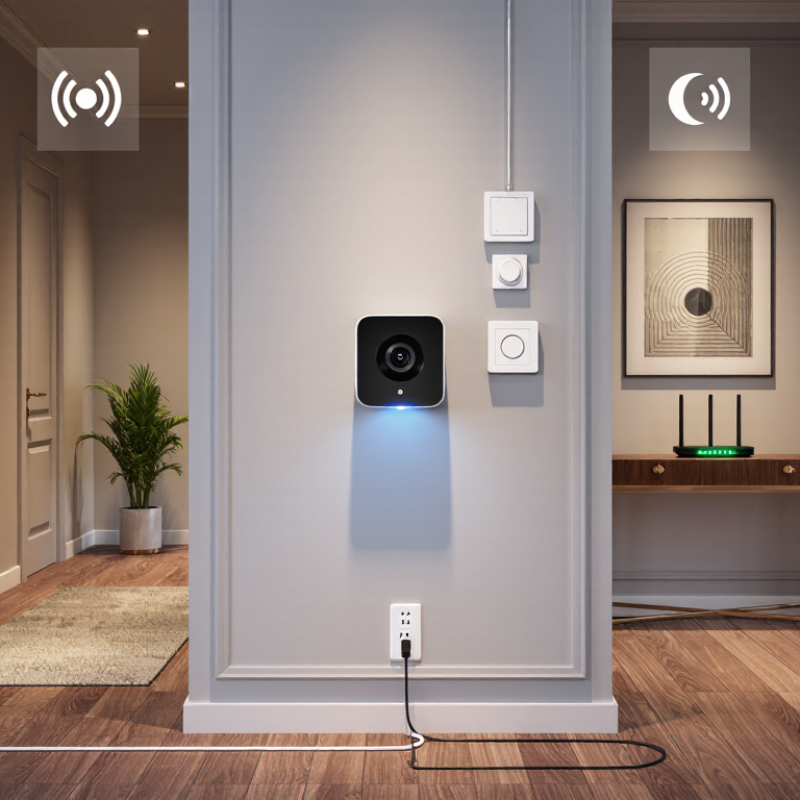
2026 Best Hidden Wall Camera for Home Security

What Is a Hidden Wall Camera and How Does It Work?

2026 Best Hidden Wall Camera for Home Security

A hidden wall camera is a compact security camera installed inside, behind, or beside a wall fixture. Its lens may appear through a tiny opening, while the housing blends with the surrounding surface. It is not magic. A small image sensor captures light, converts it into digital video, and sends footage to local storage or a secure network. Some models also use infrared lighting for darker rooms.

Motion detection usually compares changes between video frames. When movement crosses a defined area, the camera can save a clip or send an alert. A practical setup needs stable power, a clear lens path, and reliable network coverage. Thick walls can weaken wireless signals. Poor lighting can also reduce detail, even when infrared vision is available.

For responsible home security, the camera should monitor areas you control, such as an entryway or private garage. Everyone who may be recorded should receive clear notice and provide consent when required. Avoid bedrooms, bathrooms, and neighboring properties. Local privacy rules differ, so checking official guidance matters. I have found that smaller cameras are not always better; installation quality, data protection, and maintenance often matter more. Dust, loose wiring, or a forgotten storage card can quietly undermine an otherwise careful system.

Key Features to Consider in a 2026 Hidden Wall Camera

Key Features to Consider in a 2026 Hidden Wall Camera

A reliable hidden wall camera should provide sharp video without looking artificial. A 2K sensor can capture faces, packages, and entry details clearly. Wide dynamic range helps when sunlight enters through a doorway. Low-light performance matters after dark. Infrared lighting should remain discreet and avoid creating bright reflections on nearby glass.

Motion detection should distinguish people from pets, curtains, and changing shadows. Adjustable activity zones can reduce alerts from a busy street. Instant notifications are useful, but delays still happen during weak network conditions. Choose secure Wi-Fi protection, encrypted storage, and automatic software updates. Local recording can preserve evidence if cloud access fails. A small backup battery may help during short power interruptions.

Placement deserves careful thought. The camera should cover an entrance, not private rooms or neighboring property. Audio recording requires extra caution because consent rules differ by location. A tamper alert can notify you when the device shifts unexpectedly. Test the viewing angle at night, with doors open and closed. I have found that higher resolution does not fix poor placement. Sometimes a simple angle change works better. Check installation access too. A camera hidden behind an unsuitable surface may overheat, lose signal, or produce a blocked image. Choose a design that supports lawful, transparent home protection rather than secret monitoring.

2026 Best Hidden Wall Camera for Home Security - Key Features to Consider in a 2026 Hidden Wall Camera

A practical feature comparison guide for selecting a discreet, legal, and reliable wall-mounted home security camera

Key Dimension Recommended Specification Why It Matters What to Check Before Purchase Priority
Video Resolution At least 2K; 4K is useful when a wider scene must retain facial or object detail. Higher resolution can provide more identifiable detail, especially when the camera covers a large room. Confirm the effective resolution in night mode, not only the advertised daytime resolution. High
Field of View Approximately 110°–140° for most rooms. A wider viewing angle can reduce blind spots when the camera is installed in a wall or compact enclosure. Check for excessive fisheye distortion around the edges of the image. High
Low-Light Performance Color night vision with adequate ambient light, plus infrared assistance for dark conditions. Many security incidents occur in low light, where poor sensors can produce unusable footage. Review sample footage and check whether infrared illumination creates reflections from the wall surface. High
Motion Detection Adjustable zones, sensitivity controls, and person detection. Configurable detection can reduce alerts caused by curtains, pets, changing light, or passing vehicles. Verify that activity zones can exclude doors, windows, or public areas that create unnecessary alerts. High
Detection Notifications Customizable push alerts with event snapshots or short clips. Fast, relevant notifications help homeowners respond without continuously watching a live feed. Check whether notifications require a subscription and whether alert delays are clearly disclosed. Important
Audio Capability Two-way audio with microphone and speaker controls. Two-way communication can help verify activity or speak with someone near the camera. Audio recording may be restricted by local law; provide a clear notice and disable audio where required. Important
Storage Options Encrypted local storage, optional network storage, or secure cloud backup. Multiple storage methods reduce the risk of losing evidence if a device is damaged or disconnected. Check storage capacity, overwrite behavior, export format, retention period, and recurring fees. High
Data Security Encrypted transmission, secure account access, two-factor authentication, and regular firmware updates. A hidden camera still creates privacy and cybersecurity risks if its account or network connection is weak. Use a unique password, update the device regularly, and place it on a protected home network. High
Power Supply Continuous wired power with protected cable routing; battery backup is optional. Continuous power is generally more dependable for 24/7 monitoring than a small internal battery. Confirm voltage requirements, cable access, heat management, and whether installation requires an electrician. High
Network Connectivity Stable 2.4 GHz Wi-Fi support; dual-band connectivity is preferable where available. 2.4 GHz signals often travel farther through walls, while 5 GHz can provide higher speeds at shorter range. Test signal strength at the planned installation point and confirm compatibility with the home router. Important
Discreet Installation Small, non-obstructive housing with a clear lens opening and proper ventilation. A discreet installation can blend with the room while preserving image quality and device reliability. Do not conceal the lens behind materials that block light or cause glare, and avoid modifying electrical wiring without professional help. Important
Privacy Controls Physical lens shutter or electronic privacy mode, status indicator, and scheduled recording controls. Privacy controls allow residents to stop monitoring when recording is not appropriate. Confirm that privacy mode actually stops recording and does not merely hide the live preview. High
Temperature and Reliability Operating range suitable for the intended indoor location, with protection against overheating. Heat buildup inside a wall or enclosure can shorten component life and affect image stability. Keep ventilation clear and follow the installation spacing specified in the product documentation. Important
Video Export Downloadable clips with time and date information in a widely supported format. Easy export is important when footage must be reviewed, archived, or provided to authorities. Check whether exported clips contain watermarks, altered timestamps, or proprietary file restrictions. Important
Legal and Ethical Use Use only where occupants and visitors are properly informed and local surveillance laws permit it. Recording people without appropriate notice or consent can violate privacy, employment, or audio-recording laws. Never use a hidden camera in bedrooms, bathrooms, changing areas, or other places where privacy is reasonably expected. Essential
Selection note: For most homes, prioritize image quality, night performance, secure storage, privacy controls, reliable power, and lawful installation over concealment alone.

Choosing the Best Hidden Wall Camera for Your Home

Choosing the Best Hidden Wall Camera for Your Home

The best hidden wall camera should protect your home without invading anyone’s privacy. Use it only in shared areas, such as an entryway, hallway, or garage. Never place a camera in bedrooms, bathrooms, or changing areas. Check local recording laws, obtain consent where required, and consider clear notice for visitors.

Image quality matters, but it is not everything. Choose at least 1080p resolution, balanced night vision, and motion detection with adjustable activity zones. A wide lens can cover a doorway, yet it may distort faces near the edges.

I prefer encrypted storage, strong account protection, and two-factor authentication. Cloud storage is convenient, while local storage can reduce recurring costs. Both options have weaknesses.

Installation requires careful judgment. A camera facing a bright window may capture little detail. Thick walls can weaken wireless signals. Test the view during daylight and at night. Check whether furniture creates blind spots.

A backup power source can help during outages, but it will not solve every problem. Some motion alerts are also false alarms caused by pets, shadows, or passing headlights. That can become irritating quickly. My first choice would be a reliable, legally compliant camera with clear privacy controls, not the smallest device available. Small size is useful, but trust matters more.

Privacy, Legal, and Ethical Considerations

A hidden wall camera may seem useful for home security in 2026, but privacy must guide the purchase. Concealment can remove informed consent. It can also create serious legal risks. Recording guests, household workers, tenants, or children requires special care. Laws vary by country, state, and recording type. Audio is often regulated more strictly than video. Check local rules before installation.

Pew Research Center reported in 2023 that 81% of Americans feel they have little control over collected data. That concern becomes personal when a camera watches a bedroom doorway or living room sofa. The Federal Trade Commission has repeatedly warned that poorly secured connected cameras can expose private footage. Choose strong passwords, multi-factor authentication, encrypted storage, and limited user access. Disable audio unless it is clearly necessary. Test the device from outside your home network.

Ethical use is more than legal compliance. Tell regular visitors that surveillance exists, and never monitor spaces where privacy is reasonably expected. A visible camera is often safer and easier to explain. If concealment is essential, document the purpose, retention period, access list, and deletion schedule. Do not store months of footage by default. That is excessive. The National Institute of Standards and Technology’s Privacy Framework recommends identifying data risks and managing them continuously. I still find this step easy to neglect. A quick setup can become a permanent record of someone’s private life. Get written consent where appropriate, and seek qualified local legal advice before recording.

2026 Best Hidden Wall Camera for Home Security: Privacy, Legal, and Ethical Considerations

Public privacy benchmarks relevant to concealed home-camera decisions

Privacy concerns should be treated as a core selection criterion, not an afterthought. In a 2019 Pew Research Center survey of U.S. adults, 72% said they had little or no control over what companies did with their personal data, 79% were concerned about how companies used their data, and 81% believed the potential risks of data collection outweighed the benefits. For any hidden or discreet camera, obtain consent where required, avoid private spaces, disable audio unless legally justified, protect recordings, limit retention, and disclose monitoring to household members, guests, workers, and visitors when appropriate. Laws vary by location, so this information is not legal advice.

Source: Pew Research Center, “Americans and Privacy: Concerned, Confused and Feeling Lack of Control Over Their Personal Information,” November 15, 2019.

Installation, Monitoring, and Maintenance Best Practices

2026 Best Hidden Wall Camera for Home Security

Installation should begin with a privacy check, not a drill. Choose shared entryways, halls, or storage areas. Never monitor bedrooms, bathrooms, or private workspaces. Confirm local recording rules and inform everyone who may be recorded. A discreet wall-mounted design should blend with the room without pretending to be invisible. Keep the lens clear of curtains, lamps, and direct sunlight. Test the viewing angle during both daylight and evening hours. I once underestimated a glossy cabinet’s reflection; it created a bright blind spot.

Monitoring needs a simple routine. Use strong, unique account credentials and enable multi-factor protection when available. Limit access to trusted household members. Check alerts for unusual login attempts and review short recording clips regularly. Motion settings should ignore moving curtains, pets, and passing headlights. Excessive alerts quickly become background noise. Store recordings only as long as necessary, then delete them securely. A small dated log can record camera checks, software updates, and access changes.

Maintenance is easy to neglect. Wipe the lens with a soft, dry cloth each month. Inspect the mount after strong vibrations, nearby construction, or accidental contact. Test night vision, audio, storage, and backup power every few weeks. Keep firmware current through official channels, but verify settings afterward. Updates can reset preferences. If the camera behaves strangely, disconnect it and review permissions before restoring service. Security improves through careful habits, not placement alone.

FAQS

What is a hidden wall camera?

It is a compact camera placed inside, behind, or beside a wall fixture. A tiny opening lets the lens view an area. The device captures light and creates digital video. It is not magic.

How does a hidden wall camera record movement?

The camera compares changes between video frames. When movement crosses a selected zone, it may save a clip or send an alert. Shadows, pets, and headlights can trigger false alerts. This becomes annoying quickly.

Where should a hidden wall camera be installed?

Use it in areas you control, such as an entryway, hallway, or private garage. Avoid bedrooms, bathrooms, and changing areas. Never aim it toward neighboring property. A doorway is usually more practical.

Should people know about the camera?

People who may be recorded should receive clear notice. Consent may also be required, depending on local rules. Check official privacy guidance before installation. Quiet recording can create serious trust problems.

What image quality is suitable for home security?

At least 1080p resolution can provide useful detail near doors and hallways. A wide lens covers more space but may distort faces near the edges. Test faces at different distances. More pixels cannot fix a blocked view.

Can a hidden wall camera work in darkness?

Some cameras use infrared lighting for dark rooms. Night vision still depends on lens quality and positioning. Bright windows can make faces look dark. Test the view during daylight and at night.

What installation problems should I expect?

Thick walls can weaken wireless signals. Dust, loose wiring, or a forgotten storage card may stop reliable recording. Furniture can create blind spots. Installation quality matters more than tiny size.

Is cloud storage better than local storage?

Cloud storage is convenient and supports access from different locations. Local storage can reduce recurring costs and keep footage closer to home. Both options have weaknesses. Use encryption, strong account protection, and two-factor authentication when available.

Conclusion

A Hidden Wall Camera is a compact security device designed to blend discreetly into a wall or household fixture while recording activity in a designated area. This guide explains how these cameras work and highlights important features to consider in 2026, including video quality, low-light performance, motion detection, secure storage, remote access, power options, and reliable connectivity. It also offers practical advice for choosing a model based on room size, coverage needs, installation requirements, and overall home security goals.

The article emphasizes responsible use, including respecting privacy, informing household members or visitors when appropriate, and following all applicable local regulations. It also covers best practices for installation, camera positioning, password protection, software updates, monitoring, data management, and routine maintenance. By combining suitable technology with thoughtful placement and ethical oversight, homeowners can improve security while protecting personal privacy and maintaining a safe, trustworthy living environment.

Oliver

Oliver

Oliver is a seasoned marketing professional with a wealth of expertise in driving brand awareness and engagement. With a deep understanding of our company's product offerings, he consistently delivers high-quality content that enriches our professional blog. His insights not only shed light on......