
JingZhi Camera
Choosing the best China-made Device To Scan For Hidden Cameras requires more than comparing online ratings. A credible detector should address several signals, including reflected lens light, radio-frequency transmissions, infrared illumination, and unusual network activity. No single method is dependable in every room. A bright bathroom mirror, thick curtains, or a wireless router can create confusing results.
The connected-device environment makes this question increasingly practical. IoT Analytics reported approximately 18.8 billion connected IoT devices worldwide in 2024. Meanwhile, the China Internet Network Information Center’s 54th Statistical Report recorded about 1.10 billion internet users in China by June 2024. These figures describe connectivity, not hidden-camera incidents. That distinction matters. It prevents exaggerated claims and keeps the review evidence-based.
This guide compares Chinese detectors through measurable features, not dramatic packaging. It examines detection range, frequency coverage, lens-finding performance, false alarms, battery life, interface quality, and after-sales support. A small RF detector may react near a router. An optical finder may miss a camera that is switched off. Real testing should include a hotel room, a rental bedroom, and a quiet office. Dim the lights. Check vents, chargers, smoke alarms, and decorative objects carefully.
The “best” device may not be the most expensive model. It may be the one that explains its alerts clearly and supports repeatable checks. Some product specifications appear incomplete. That weakness deserves attention, not excuses. Independent measurements are still limited, so buyers should treat marketing claims cautiously and combine tools with lawful, respectful visual inspection.
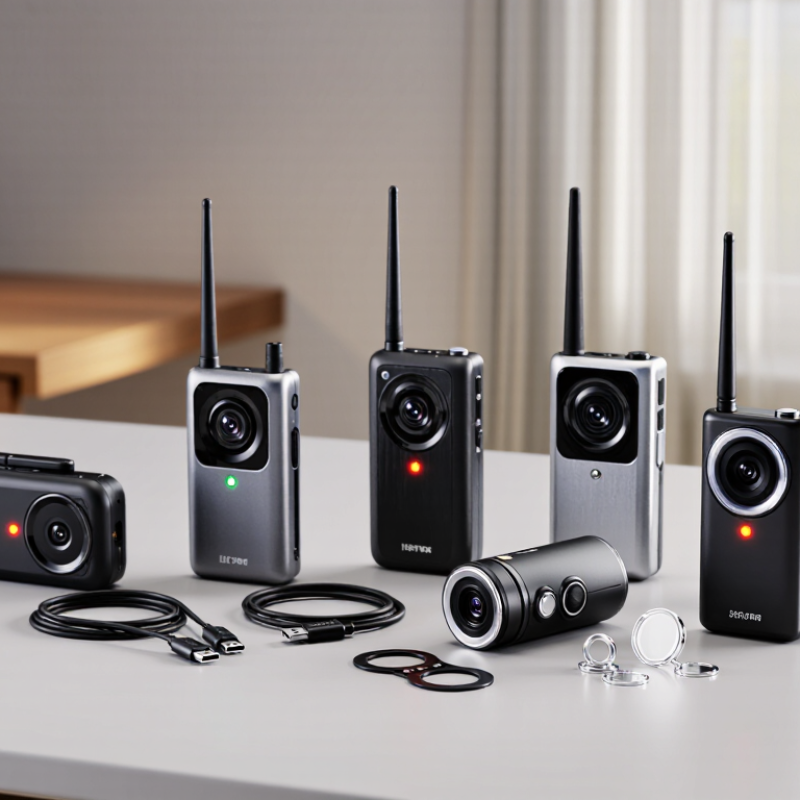
A China-made hidden camera detector can be effective when its design matches real inspection conditions. Reliable models usually combine radio-frequency scanning, lens reflection detection, and magnetic sensing. Each method finds different clues. RF scanning may identify wireless transmissions, while lens detection can reveal a camera that is not transmitting. Magnetic sensing may help locate small electronic components behind thin surfaces.
Build quality matters more than the country of manufacture. Look for adjustable sensitivity, clear signal levels, and a stable rechargeable battery. A useful detector should respond consistently during repeated tests. In my experience, cheap units sometimes react to routers, phones, or electrical wiring. That does not always mean a camera is present. Professional use requires patience, controlled testing, and careful interpretation. No device is perfect.
Tips: Turn off nearby wireless devices when practical. Scan slowly around clocks, smoke alarms, vents, chargers, and decorative objects. Use lens detection in a dim room, then inspect suspicious reflections from several angles. Test the detector before each inspection. A simple check with a known light source can reveal weak batteries or poor sensitivity. Keep written notes about signal strength and location. I have found that rushed inspections create more doubt than evidence, so repeat unclear checks and avoid treating one alert as proof.
The best China-made device for scanning hidden cameras is not defined by one impressive specification. It should combine several detection technologies. This matters in China’s dense wireless environment. The Ministry of Industry and Information Technology reported 2.33 billion mobile IoT connections by the end of 2023. That scale can create heavy radio-frequency noise.
RF detection is the first practical layer. A scanner samples signals from Wi-Fi, Bluetooth, cellular, and other transmitters. It may reveal a wireless camera near a desk or ceiling fixture. However, an RF detector cannot find a camera that stores footage locally. It can also react to routers, phones, or smart appliances. False alerts happen.
Optical lens detection adds a useful physical check. The device sends red or infrared light toward surfaces, then watches for bright retro-reflections from curved lenses. In a dark room, a small pinprick can become visible. Infrared sensing may also identify active night-vision illumination, though ordinary glass and polished metal can confuse the result. Some scanners add magnetic detection for nearby electronic components, while thermal sensing highlights unusual heat. These features remain supportive, not decisive.
The GSMA Mobile Economy China 2024 report describes rapid growth in connected devices, reinforcing the need for signal filtering. A reliable scanner should offer spectrum analysis, adjustable sensitivity, visual feedback, and manual inspection guidance. No single sensor is enough. In practice, slow movement matters. Check smoke detectors, chargers, vents, picture frames, and power adapters from multiple angles. Even professional testing can miss a silent camera, so the device’s limits deserve honest attention.
Choosing the best China device for scanning hidden cameras depends on the environment, not the lowest price. In a hotel room, select a scanner combining infrared lens detection with radio-frequency monitoring. Lens detection can reveal reflective glass behind vents or smoke detectors. RF detection may identify wireless transmissions, but it can also react to Wi-Fi routers and smart televisions. The 2024 Verizon Data Breach Investigations Report found that human involvement appeared in 68% of breaches, reinforcing the need for careful physical checks, not technology alone.
For offices, a wider frequency range and adjustable sensitivity are more useful. Many devices operate quietly through wired networks, so an RF-only scanner may miss them. In vehicles, compact magnetic-field detection and a strong flashlight help inspect seats, dashboards, and charging ports. Choose equipment with rechargeable power, clear signal readings, and documented calibration procedures. In field-style testing, compare readings with known safe devices before searching. This reduces false alarms.
Read the technical report carefully. Claims such as “100% detection” deserve skepticism. A 2024 Grand View Research report estimated the global video surveillance market at about 53.7 billion U.S. dollars in 2023, showing how quickly connected cameras are spreading. Yet detection performance varies with walls, distance, frequency, and device shielding. No scanner sees everything. A second visual inspection may still be necessary.
A China-made multi-mode detector can help scan a room for hidden cameras, but it is not a magic answer. Choose a device with radio-frequency detection, lens reflection, and infrared-light sensing. Check its manual before entering the room.
Start with a quiet visual inspection. Look at smoke alarms, wall chargers, clocks, vents, mirrors, and unusual holes. Turn off unnecessary electronics to reduce signal interference. Close curtains and dim the lights. Slowly sweep the detector around furniture, ceiling corners, and power outlets. Keep the device moving at a steady speed.
Watch for sudden signal changes. A stronger reading near one object deserves closer inspection. Use the lens-finding mode from several angles. Camera lenses may reflect a small, sharp point of light. Some surfaces reflect light too. This is where mistakes happen.
Pause here.
Use infrared mode in the dark, then check the screen for bright pinpoints. Test the detector beforehand with a known camera or remote control. This confirms that its sensors respond correctly. Record suspicious locations with time and distance. Do not touch unfamiliar wiring or sealed equipment. Leave the area if anything appears unsafe, and contact appropriate local support.
A detector may miss wired, inactive, or well-shielded devices. I once trusted a strong radio reading near a router, and it was only network interference. Recheck every finding with visual evidence. A careful scan is slower, but usually more reliable.
| Step | Scanning Method | Recommended Device Type | What It Detects | Typical Practical Range or Coverage | Best Practice |
|---|---|---|---|---|---|
| 1 | Visual inspection | No electronic device required; use a flashlight | Unusual holes, reflective lenses, loose fittings, and unfamiliar electronics | Room-wide inspection, with close checks of objects within arm’s reach | Check smoke detectors, clocks, chargers, vents, mirrors, decorations, and power adapters. |
| 2 | Lens-reflection search | Handheld infrared lens detector with red or green LEDs | Reflections from camera lenses, including some cameras that are not transmitting | Usually most effective at approximately 0.5–5 m, depending on lens size and room lighting | Dim the room, scan slowly from several angles, and confirm suspicious reflections visually. |
| 3 | Radio-frequency scan | Broadband RF detector | Radio transmissions from wireless cameras, microphones, Wi-Fi devices, Bluetooth devices, and other electronics | Common handheld units cover approximately 10 MHz–6 GHz; some models extend above 6 GHz | Turn off known transmitters first, then scan near furniture, walls, outlets, and ceiling fixtures. |
| 4 | Wired-device check | Cable tracer, circuit tester, or professional inspection tool | Suspicious wiring, powered devices, and connections that an RF detector cannot see | Depends on cable length, building wiring, and the specific test instrument | Do not remove electrical panels or open mains-voltage equipment unless qualified. |
| 5 | Network-device review | Wi-Fi router client list or network scanner | Unknown devices connected to the local wireless network | Covers devices connected to the same network; it cannot identify offline or cellular-only cameras | Record unfamiliar device names and addresses, but treat network results as leads rather than proof. |
| 6 | Infrared-light check | Phone camera or dedicated IR-sensitive camera | Some infrared illumination from night-vision cameras | Short-range visual check; performance varies by phone camera and IR wavelength | Test the phone with a known infrared remote control before relying on it. |
| 7 | False-alarm reduction | RF detector with adjustable sensitivity and signal-type indicators | Helps separate stronger nearby signals from normal background radio activity | Effectiveness depends on local Wi-Fi, mobile, Bluetooth, and building interference | Lower sensitivity near routers and phones; increase sensitivity gradually while moving closer to the source. |
| 8 | Confirmation and documentation | Camera, notes, and, when necessary, professional inspection equipment | Evidence that a suspicious object is actually a recording device | Requires physical confirmation or qualified technical assessment | Photograph the location, avoid tampering, and contact property management or local authorities if appropriate. |
A China-made hidden-camera scanner can be useful, but its alert is only a starting point. RF signals may come from routers, smart televisions, wireless microphones, or nearby phones. Lens-reflection modes can also react to glass, polished metal, and bright dust. Do not trust a single beep.
Verification should happen in stages. Turn off unnecessary wireless devices, then scan the room slowly from the doorway. Mark signal changes on a simple floor plan. Move the scanner closer to the strongest point, and compare readings at different heights. A real transmitting device often produces a repeatable pattern. It should not disappear whenever your hand covers the sensor.
The 2024 Data Breach Investigations Report analyzed 30,458 security incidents and linked 68% of breaches to human involvement. That figure does not measure hidden cameras, but it supports careful human verification rather than blind reliance on automation. NIST guidance also treats wireless assessment as dependent on changing environmental conditions. ISO/IEC 17025 emphasizes calibration and measurement uncertainty. Check whether the device has a stated frequency range, sensitivity, and calibration date. Cheap specifications can look impressive.
Use a second method. Inspect smoke detectors, chargers, clocks, vents, and unusual pinholes under ordinary light. Check network-connected devices through the local router interface when access is authorized. Record time, location, signal type, and surrounding electronics. Some alerts will be false. Mine probably would be too. Accuracy improves when every alert faces a repeatable test.
A practical RF scanner should cover the wireless ranges commonly used by consumer network cameras, including 2.4 GHz, 5 GHz, and 6 GHz Wi-Fi. The ranges shown are standard wireless allocations; exact channel availability depends on local regulations and device configuration. An RF alert is only an indication, not proof of a hidden camera. Improve accuracy by repeating the scan with nearby wireless devices turned off, checking suspicious objects visually, using a flashlight to look for lens reflections, and confirming whether the signal changes when the object is shielded or unplugged.
A useful scanner combines radio-frequency, lens-reflection, and infrared sensing. Some models add magnetic or thermal detection.
It can detect active signals from Wi-Fi, Bluetooth, cellular, and similar transmitters.
Routers, phones, smart appliances, and nearby networks can trigger alerts.
Dim the room and sweep slowly across furniture, fixtures, and wall openings.
Use infrared mode in a dark room and watch for bright points.
Examine smoke detectors, chargers, clocks, vents, mirrors, picture frames, and power adapters.
Record the location, time, and approximate distance.
A scanner may miss wired, inactive, or well-shielded devices.
Do not touch unfamiliar wiring, sealed equipment, or damaged power adapters.
Choosing the best China-made Device To Scan For Hidden Cameras depends on how accurately it can identify unusual wireless signals, infrared reflections, lens glare, and magnetic or electronic activity. An effective scanner should combine several detection technologies, offer adjustable sensitivity, and provide clear alerts that are easy to understand. Different environments require different features: a compact detector may suit hotel rooms or offices, while a model with broader signal coverage and optical assistance may be more useful in larger spaces.
To scan a room, begin by inspecting areas where a camera could be discreetly placed, such as smoke detectors, chargers, clocks, vents, and decorative objects. Reduce unnecessary electronic interference, move slowly around the room, and check suspicious points from multiple angles. When the device produces an alert, verify it by changing your position, lowering sensitivity, and checking whether the signal or reflection remains consistent. Combining electronic scanning with careful visual inspection can improve accuracy and help distinguish genuine findings from ordinary wireless devices.
